Trucks as Mobile Spaces
The practical constraints of using a truck body as a mobile space, from vehicle layout and cargo securement to weight, balance and height.
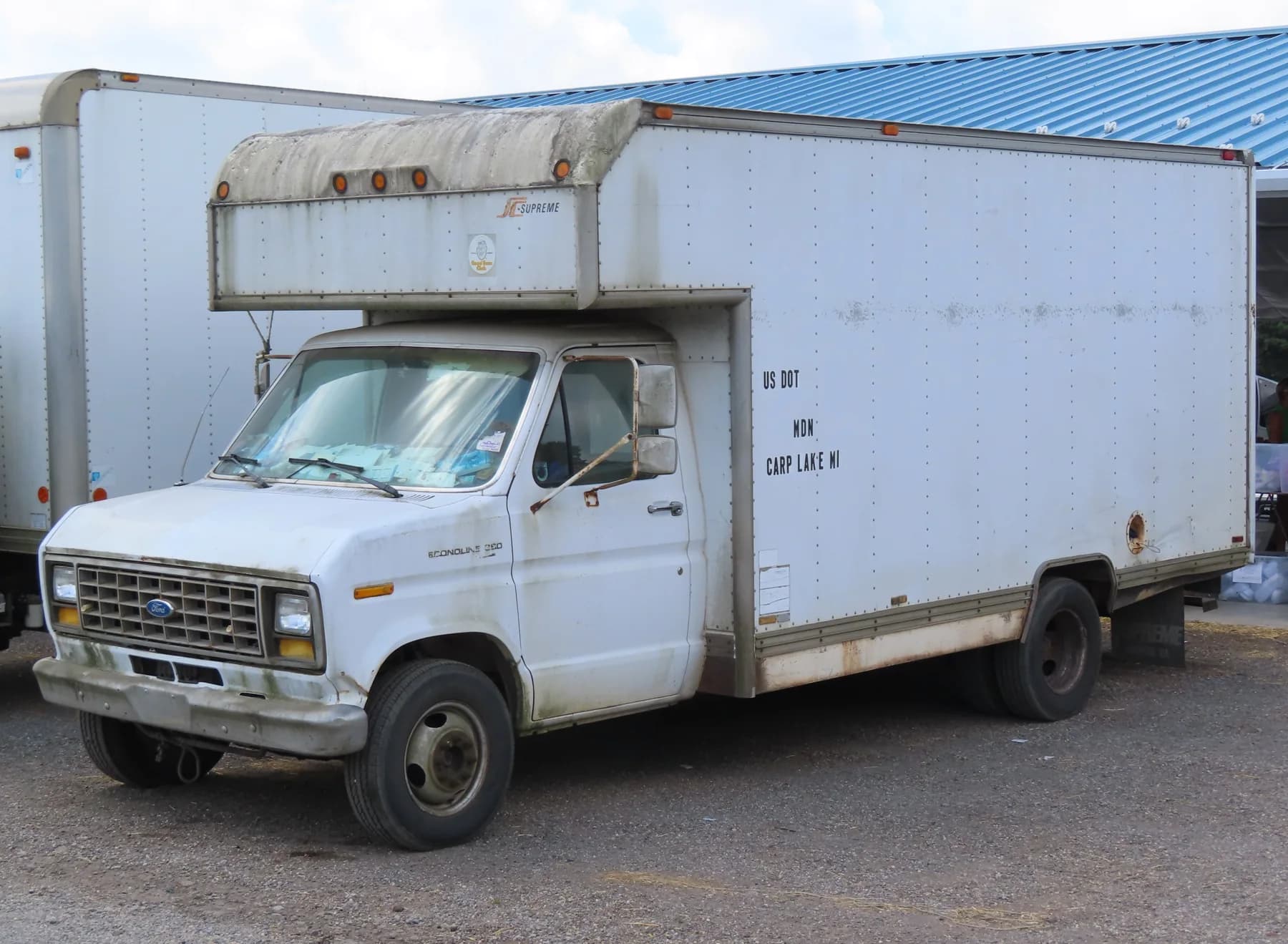

A box truck is already a room. It has a flat floor, four walls, a roof, a door, and it keeps weather out, which is most of what a small interior space has to do. The thing that makes it interesting is that the room can be somewhere else tomorrow. That combination, an enclosed rectangular volume on a chassis licensed for ordinary road use, is why the form gets borrowed for purposes that have nothing to do with hauling freight, and it is also why the borrowing runs into constraints a stationary room never faces.
This page covers those constraints: vehicle layout, cargo securement, weight, balance and height. It distinguishes the driving requirements addressed by its sources from the separate questions involved in using a parked interior.
Why the box is the part that matters
The distinction that governs everything else is between a cargo body carried on a straight-truck chassis and a semitrailer pulled by a tractor, which is the subject of semi, box and straight trucks compared. A straight truck keeps the body and the cab on one frame. Length and turning space depend on the actual vehicle; a straight-truck layout alone does not guarantee access to a particular street or parking space. Licensing follows the ratings rather than the shape of the body: the training material notes that gross vehicle weight rating and gross combination weight rating are what roadside enforcement uses to determine whether a driver and vehicle are subject to commercial license regulations. For a mobile venue, vehicle access and usable interior space are separate design questions.
The room still has to drive
When a covered commercial motor vehicle transports cargo on public roads, federal securement rules apply. Under 49 CFR 393.100, the vehicle must be loaded and equipped, and the cargo secured, to prevent loss of the load and shifting that adversely affects stability or maneuverability. That provision does not by itself classify permanently installed equipment, structural components or occupied seats as cargo; vehicle conversions require a separate assessment.
Commercial driver training describes blocking, bracing, tie-downs and load checks for transported cargo. The appropriate method depends on the load and the applicable securement rules. Those cargo examples are not instructions for anchoring seating, designing a stage, or approving a vehicle conversion.
Weight, balance, and height decide the layout
Three physical limits shape what can be built into a box, and all three come from the same training material.
Weight comes first. Every axle has a weight limit, every tire carries a load rating stated on its sidewall, and the suspension has a manufacturer's capacity. A build that adds permanent structure spends payload that is then unavailable for anything else. The weight rules that apply on the road do not make exceptions for interior fit-out.
Balance comes second, and it is less obvious. Too much weight on the steering axle makes the vehicle hard to steer and can damage the axle and tires. Shifting weight too far rearward leaves the steering axle too light to steer safely. Too little weight over the drive axles produces poor traction. A layout designed around how people move through the space can easily violate all three.
Height comes third. A high center of gravity, meaning heavy items placed high or stacked on top of lighter ones, makes the vehicle more likely to tip, and the danger peaks in curves and in avoidance maneuvers. The guidance is to keep the heaviest parts of the load under the lightest. Overhead clearance is its own trap: an empty van sits higher than a loaded one, so a bridge cleared on the way in is not guaranteed on the way out, and posted clearances can be wrong after repaving.
The part these sources do not answer
Everything above concerns the vehicle in motion. Once a truck body is parked and people are standing inside it, a different set of questions applies: occupancy, means of escape, exit width, lighting, fire safety, street permitting, and whether a vehicle counts as a structure at all. Those sit in building codes, fire codes and local permitting, none of which are among the sources for this article. No claim is made here about what any jurisdiction requires. The honest summary is that the driving constraints are documented and specific, and the occupancy constraints are real but outside the evidence assembled for this page.
Sources
- New Jersey MVC Commercial Driver License Manualnj.gov/mvc/pdf/license/CDL_Manual.pdfSource consulted: 2026-09-18. Regulations may change; check the current official text before relying on them.
- 49 CFR 393.100: Applicability and general requirements of cargo securement standards (Cornell LII)law.cornell.edu/cfr/text/49/393.100Source consulted: 2026-09-18. Regulations may change; check the current official text before relying on them.
Read next
Semi, Box Truck, or Straight Truck: What Actually Separates Them
A semi is a combination of two units, a straight truck is one frame, and a box truck describes a body style. The differences change handling, brakes, licensing, and which federal rules apply.
How Much Does a Semi Truck Weigh?
The 80,000-pound figure is a federal Interstate limit on gross weight, not a typical weight and not a payload. What the limits actually cover, how axles and spacing constrain them, and where they do not apply.