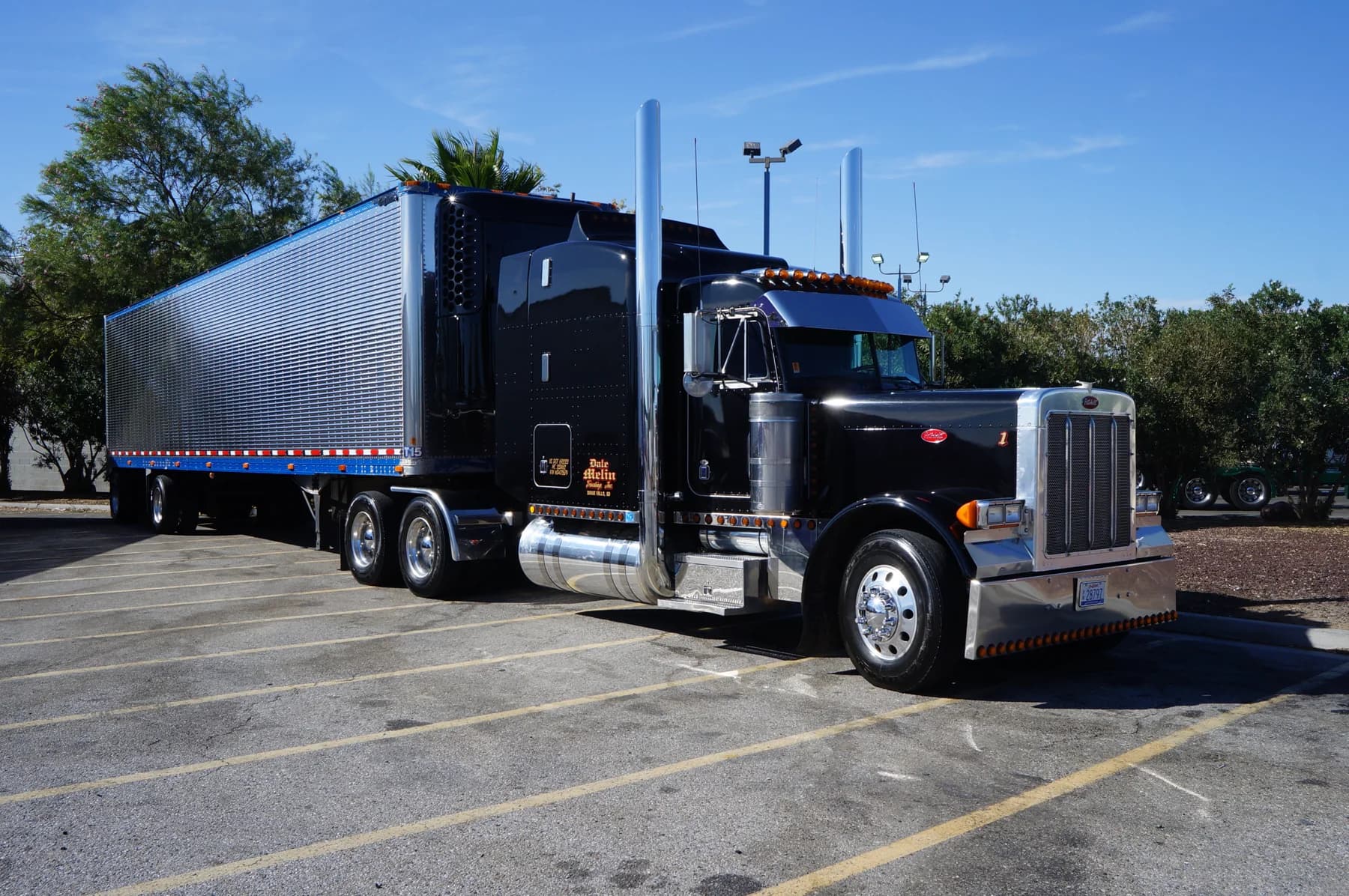
_Truck_Peterbilt_at_Flying_J_Travel_Plaza_(en2016)_(4).JPG)
How Much Does a Semi Truck Weigh?
The 80,000-pound figure is a federal Interstate limit on gross weight, not a typical weight and not a payload. What the limits actually cover, how axles and spacing constrain them, and where they do not apply.
A semi, a straight truck and a box van are three different vehicles with three different sets of rules behind them, and the words for them get used interchangeably almost everywhere outside the industry. This section starts with the distinctions, then works through the systems that make a heavy vehicle behave the way it does.
It is written for readers who did not grow up around trucks: drivers who share the road with them, reporters who have to describe one accurately, and anyone trying to read a federal regulation without a glossary.
How air-braked commercial vehicles use compressors, tanks, foundation brakes and spring brakes. Other commercial vehicles may use hydraulic systems.
Each piece assumes the one before it.
A semi is a combination of two units, a straight truck is one frame, and a box truck describes a body style. The differences change handling, brakes, licensing, and which federal rules apply.
The 80,000-pound figure is a federal Interstate limit on gross weight, not a typical weight and not a payload. What the limits actually cover, how axles and spacing constrain them, and where they do not apply.
How air-braked commercial vehicles use compressors, tanks, foundation brakes and spring brakes. Other commercial vehicles may use hydraulic systems.
The 80,000-pound figure is a federal Interstate limit on gross weight, not a typical weight and not a payload. What the limits actually cover, how axles and spacing constrain them, and where they do not apply.
A semi is a combination of two units, a straight truck is one frame, and a box truck describes a body style. The differences change handling, brakes, licensing, and which federal rules apply.