Semi, Box Truck, or Straight Truck: What Actually Separates Them
A semi is a combination of two units, a straight truck is one frame, and a box truck describes a body style. The differences change handling, brakes, licensing, and which federal rules apply.
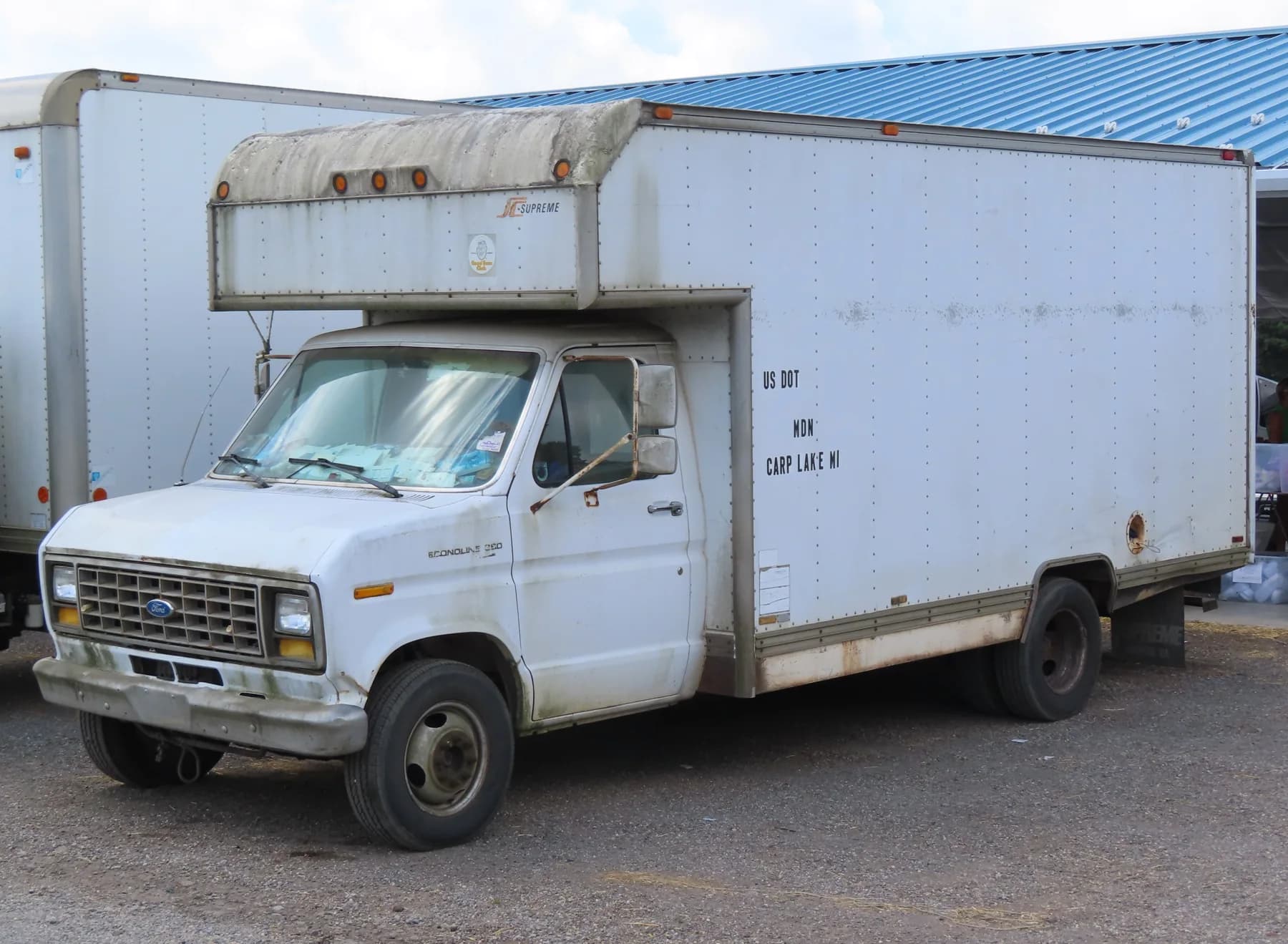

The three terms are not describing the same property of a vehicle. A semi is a combination: a truck tractor pulling a separate semitrailer, joined at a coupling, so the unit bends in the middle. A straight truck is a single unit, with the cab and the cargo body mounted on one frame that does not articulate. "Box truck" is a description of the body — an enclosed rectangular cargo box — and almost always sits on a straight-truck chassis. So "semi" and "straight truck" answer the question how many frames?, while "box truck" answers what shape is the cargo area?
One frame or two
The distinction that matters mechanically is articulation. The New Jersey commercial driver license manual treats combination vehicles as their own subject, and its reason is blunt: combinations are "usually heavier, longer, and require more driving skill than single commercial vehicles." A straight truck turns as one rigid object. A tractor-semitrailer has a joint, and the trailer behind that joint does things the cab does not.
Worth noting: "box truck" is common trade and everyday usage rather than a term the CDL manual defines. The manual talks about "cargo vans" and van bodies when it means an enclosed box, and its one memorable observation about them is a clearance problem — an empty van sits higher than a loaded one, so fitting under a bridge while loaded does not mean you will fit under it empty.
Where the license line is drawn
Licensing does not sort vehicles by nickname. The federal classes described in the manual sort them by weight rating and by whether something is being towed:
| Class | What falls in it |
|---|---|
| A | Combinations rated 26,001 lb or more, where the towed unit is rated over 10,000 lb |
| B | Single vehicles rated 26,001 lb or more, including such vehicles towing a unit rated no more than 10,000 lb |
| C | Vehicles not in A or B—including qualifying combinations—designed to carry 16 or more people including the driver, carrying placard-requiring hazardous materials, or carrying listed select agents or toxins |
That is why a large box truck can sit on either side of the line depending on its rating, and why a Class A holder may also drive Class B and C vehicles, subject to appropriate endorsements and license restrictions. The ratings involved are explained further in our piece on how much a semi truck actually weighs.
Articulation changes the handling
The manual's combination-vehicle section describes behaviors associated with articulated vehicles. Quick steering inputs can produce a "crack-the-whip" effect called rearward amplification, where a following trailer has a stronger lateral response than the tractor. That response is not a crash-probability estimate for a particular vehicle. Locking the trailer wheels can produce a trailer jackknife, which the manual says is most likely when the trailer is empty or lightly loaded.
Both types off-track — the rear wheels follow a tighter path than the front through a corner — but the manual notes that longer vehicles off-track more, and that the trailer's rear wheels off-track more than the power unit's. That geometry is part of why a truck's blind spots behave the way they do in turns.
Braking hardware differs too
The manual pairs hydraulic brakes with "cars and light/medium trucks" and compressed-air systems with large and heavy vehicles. An air-braked combination adds connections between its units: two air lines between units (a service line and an emergency line), glad-hand couplers, and a tractor protection valve. We cover that hardware in detail in how commercial truck braking systems work.
Even the rear-end rules split
Federal rear impact guard requirements in 49 CFR 393.86 are written as two regimes. Trailers and semitrailers rated 10,000 lb or more and manufactured on or after January 26, 1998 must carry a guard meeting FMVSS No. 223, installed so the vehicle meets FMVSS No. 224. A separate, older paragraph covers other motor vehicles manufactured after December 31, 1952 — the category a straight box truck falls into — where the trigger is geometric: the rear bottom edge of the body more than 30 inches above the ground when empty. Truck tractors are excluded, along with pole trailers, pulpwood trailers, and several other listed types. The consequences are discussed in underride crashes.
What this means on the road
Two vehicles that look similarly large can be under different license classes, different brake hardware, different rear-guard paragraphs, and different weight math — the Interstate gross limit of 80,000 pounds documented by FHWA applies to the whole vehicle or combination, not to a body style. The useful question is not what to call it, but how many frames it has and what it is rated to weigh.
Sources
- New Jersey MVC Commercial Driver License Manualnj.gov/mvc/pdf/license/CDL_Manual.pdfSource consulted: 2026-09-18. Regulations may change; check the current official text before relying on them.
- 49 CFR 393.86 — Rear impact guards and rear end protection (Cornell LII reproduction)law.cornell.edu/cfr/text/49/393.86Source consulted: 2026-09-18. Regulations may change; check the current official text before relying on them.
- FHWA Bridge Formula Weightsops.fhwa.dot.gov/freight/publications/brdg_frm_wghts/index.htmSource consulted: 2026-09-18. Regulations may change; check the current official text before relying on them.
Read next
How Commercial Truck Braking Systems Work
How air-braked commercial vehicles use compressors, tanks, foundation brakes and spring brakes. Other commercial vehicles may use hydraulic systems.
How Much Does a Semi Truck Weigh?
The 80,000-pound figure is a federal Interstate limit on gross weight, not a typical weight and not a payload. What the limits actually cover, how axles and spacing constrain them, and where they do not apply.
Where a Commercial Truck's Blind Spots Are
Large trucks have areas their mirrors cannot show, and driver training treats that as a property of the vehicle rather than a lapse. What the CDL manual says about mirrors, backing, and turns — and what it declines to map.