What Is a Jake Brake? How Engine Brakes Slow a Truck
A Jake brake is a compression release engine brake. How it turns a diesel into an air compressor, why some trucks are so loud with it, and what noise laws say.
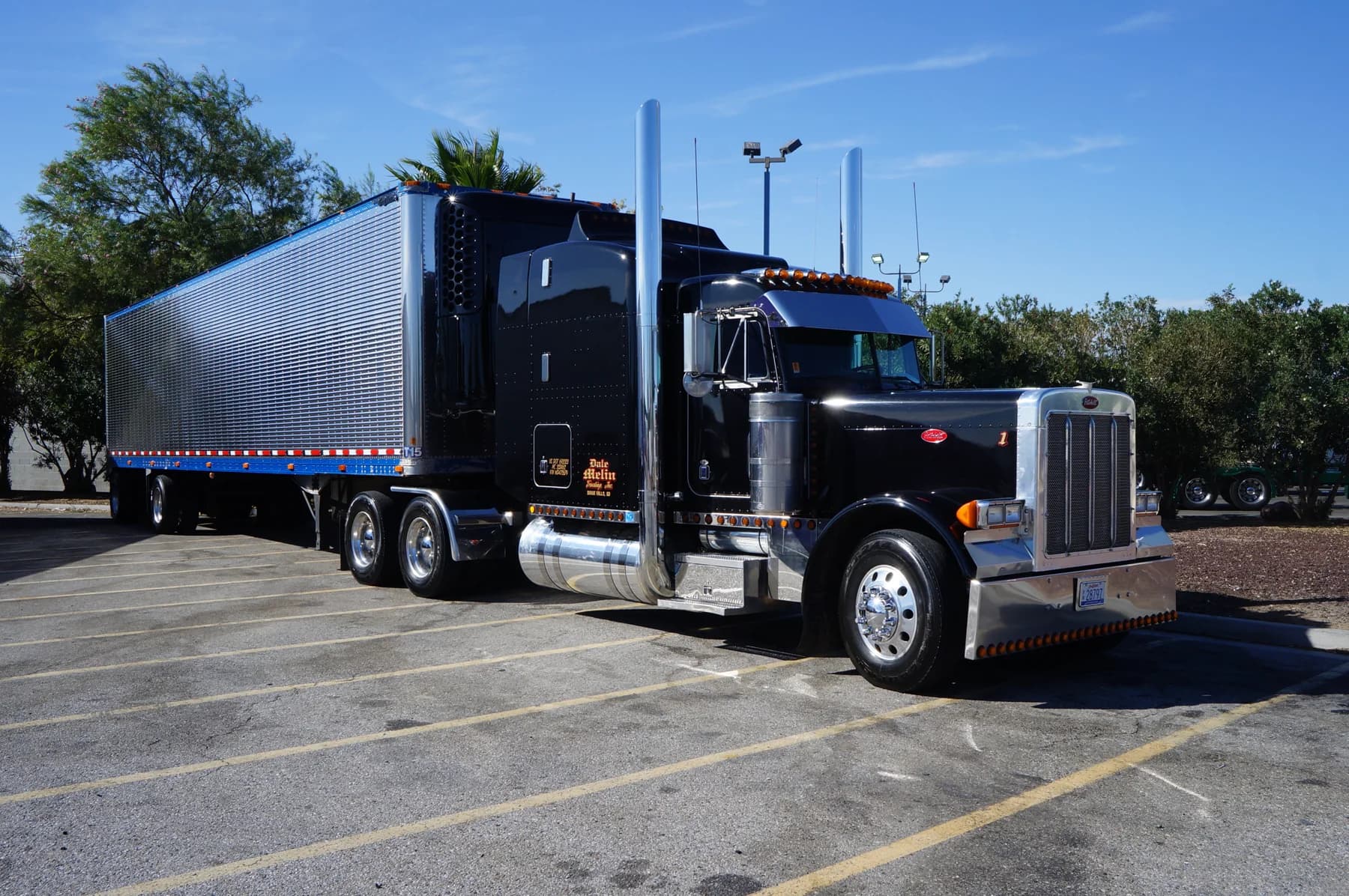

"Jake brake" is the shop-floor name for a compression release engine brake, the device behind the rapid, rattling bark a loaded truck makes as it slows on a hill or rolls into town. The nickname comes from Jacobs Manufacturing, which ASME says has produced the device since 1961. Road signs and state laws usually say "engine brake" or "compression brake" instead.
It works inside the engine, apart from the wheel brakes, and it lets the air brakes at the wheels do less of the work.
How it turns an engine into a brake
When a driver lifts off the throttle on a downgrade, the truck's momentum keeps turning the engine. Each piston still squeezes air on its way up. In a normal engine that compressed air pushes the piston back down on the next stroke, so most of the energy comes straight back and the engine slows the truck only a little.
A compression release brake breaks that loop. Clessie L. Cummins laid out the method in U.S. Patent 3,220,392, filed in 1962 and granted on November 30, 1965: open a valve to the atmosphere near the end of the compression stroke and close it again shortly after. The pressure the piston just built escapes, so it never pushes the piston back down. The patent describes the result as converting the engine into an air compressor, and the truck's own momentum has to run it. The same patent ties the valve action to the fuel control and a fuel shut-off, so the cylinders doing the braking are not also burning fuel.
ASME, which named the Jacobs Engine Brake Retarder its landmark number 108, calls it "the first practical mechanism for altering on demand the valve timing on a truck diesel engine." With the brake switched off, the engine runs and powers the truck as normal.
Modern versions work the same way. A 2018 Jacobs Vehicle Systems patent puts it this way: with the brake on, the exhaust valves of one or more unfueled cylinders open near the top of the compression stroke.
Engine brake, exhaust brake and other retarders
Driver training manuals file all of these under "retarders." The New Jersey commercial driver license manual lists four basic types: exhaust, engine, hydraulic and electric. The driver can switch any of them on or off, and on some vehicles the driver can adjust how hard they work. Once switched on, a retarder applies its braking force only through the powered wheels, and only when the driver lets up on the accelerator all the way.
An exhaust brake leaves the valves alone. It restricts the flow of exhaust gas and raises back pressure inside the engine, according to the background section of the same Jacobs patent. That patent also notes that compression release and exhaust brakes can be used together for more braking power.
Why drivers use it
According to the manual, retarders cut how often the driver needs the service brakes, reduce brake wear and give the driver another way to slow down. On a long downgrade the manual goes further. Drivers should shift to a low gear before the grade starts and use the braking effect of the engine as the principal way to control speed. That effect is strongest when the engine runs near its governed rpm in the lower gears.
Wheel brakes used hard for too long overheat and fade, as the braking systems explainer covers. An engine brake soaks up part of that energy before it ever reaches the drums. ASME's landmark citation makes the same point: the device lets large trucks descend long, steep grades at a controlled speed while the service brakes stay cool for emergencies. A 2008 Maine Municipal Association legal column adds that engine brakes are very effective at slowing heavy trucks on a downgrade, and that in most cases a truck needs more distance to stop without one. For the federal brake test figures, see truck stopping distance.
When drivers turn it off
Because a retarder works only through the powered wheels, it can break their grip. The New Jersey manual warns that on poor traction a retarder may make those wheels skid, and tells drivers to turn it off whenever the road is wet, icy or snow covered.
Why some trucks are so loud
The same manual warns that retarders can be noisy, so drivers should know where their use is allowed. The Maine Municipal Association column traces the noise to the exhaust. It says engine braking can be quite loud on trucks with poorly muffled or unmuffled exhaust, such as straight pipes, and that this is what residents complain about. It calls illegal exhaust systems "the real problem in this noise issue."
Federal rules already set the noise ceiling. EPA's interstate motor carrier noise rule in 40 CFR Part 202 covers vehicles over 10,000 pounds gross vehicle weight rating or gross combination weight rating run by motor carriers engaged in interstate commerce. Newer trucks face lower limits:
| Test in 40 CFR Part 202 | Built before the 1986 model year | 1986 model year and later |
|---|---|---|
| Highway, speed limit 35 mph or less, measured 50 feet from the lane centerline | 86 dB(A) | 83 dB(A) |
| Highway, speed limit above 35 mph, same measurement | 90 dB(A) | 87 dB(A) |
| Stationary, wide open throttle from idle to governed speed, 50 feet from the vehicle centerline | 88 dB(A) | 85 dB(A) |
The same part requires an exhaust system free of defects that affect sound reduction, fitted with a muffler or other noise dissipative device, and without any cut-out, bypass or similar device. A separate EPA rule for new trucks, 40 CFR 205.52, has set an 80 dBA standard since January 1, 1988, down from 83 dBA in 1979. It applies to new vehicles over 10,000 pounds gross vehicle weight rating that can carry property, and it excludes buses.
What the "no engine brake" signs mean
Part 202 never mentions engine brakes. The new-truck rule names them only in its test procedure, 40 CFR 205.54-1, which requires an extra closed throttle deceleration test for trucks that have one. Neither rule says when drivers may use them. Rules on that come from states and towns, and the four below all center on the muffler.
- Washington: RCW 46.37.395 lets drivers of Washington-registered vehicles rated 10,001 pounds or more use compression brakes only with a working muffler and exhaust system that controls excess noise. A turbocharger does not count as a muffler. Fines run $250, $500 and $750 for first, second and later violations, and local governments may adopt stricter ordinances.
- Illinois: under 625 ILCS 5/12-602.1, counties and municipalities may post signs telling commercial vehicle drivers "EXCESSIVE ENGINE BRAKING NOISE PROHIBITED," and the state Department of Transportation may post them on interstates near weigh stations next to residential areas. The ban does not apply to an engine with an adequate muffling system in working order, emergency use to avoid a collision is a defense, and a violation carries a $75 fine.
- Colorado: the Colorado Department of Transportation's 2025 sign guide uses a sign reading "Truckers Engine Brake Mufflers Required." A state highway qualifies only if it is a freight corridor that is not a freeway or interstate and meets at least three tests: a long steep downgrade, homes within 1,000 feet of the road spaced less than 200 feet apart on average, trucks making up at least 15 percent of traffic (or a share the region traffic engineer sets), or a 15 mph drop in the speed limit. CDOT allows the signs while noting "the lack of evidence that they are effective in reducing engine brake noise."
- Maine: the Maine Municipal Association column advises towns against adopting engine braking ordinances at all. It calls them hard to enforce and says federal law may preempt them for interstate carriers. It suggests having police check noisy trucks for muffler integrity, and if a town does post signs, avoiding the term "jake brake."
Sources
- U.S. Patent 3,220,392: Vehicle engine braking and fuel control system (Clessie L. Cummins, 1965)patents.google.com/patent/US3220392A/en
- ASME Landmark #108: Jacobs Engine Brake Retarderasme.org/about-asme/engineering-history/landmarks/108-jacobs-engine-brake-retarder
- U.S. Patent 10,132,247: Method and apparatus for combined exhaust and compression release engine brakingpatents.google.com/patent/US10132247B2/en
- New Jersey MVC Commercial Driver License Manualnj.gov/mvc/pdf/license/CDL_Manual.pdfSource consulted: 2026-09-18. Regulations may change; check the current official text before relying on them.
- 40 CFR Part 202: Motor carriers engaged in interstate commerce (eCFR)ecfr.gov/current/title-40/chapter-I/subchapter-G/part-202
- 40 CFR 205.50: Applicability, medium and heavy trucks (eCFR)ecfr.gov/current/title-40/chapter-I/subchapter-G/part-205/subpart-B/section-205.50
- 40 CFR 205.52: Vehicle noise emission standards (eCFR)ecfr.gov/current/title-40/chapter-I/subchapter-G/part-205/subpart-B/section-205.52
- 40 CFR 205.54-1: Low speed sound emission test procedures (eCFR)ecfr.gov/current/title-40/chapter-I/subchapter-G/part-205/subpart-B/section-205.54-1
- RCW 46.37.395: Compression brakes (Jake brakes) (Washington)law.justia.com/codes/washington/2022/title-46/chapter-46-37/section-46-37-395
- 625 ILCS 5/12-602.1: Engine braking noise signs (Illinois)ilga.gov/legislation/ilcs/documents/062500050K12-602.1.htm
- Colorado DOT: Engine Brake/Noise Ordinance Sign Guidance, 2025 Editioncodot.gov/safety/traffic-safety/assets/documents/engine-brake-noise-ordinance-sign-warrant-guide.pdf
- Maine Municipal Association: Jake brake issues (Legal Notes, Maine Townsman)maine.gov/mdot/mlrc/docs/technical/JakeBrakeIssues.pdf
Read next
How Commercial Truck Braking Systems Work
How air-braked commercial vehicles use compressors, tanks, foundation brakes and spring brakes. Other commercial vehicles may use hydraulic systems.
Truck Stopping Distance: The Federal Brake Standard Numbers
How far a truck must be able to stop under FMVSS 121, by speed, vehicle type and load, plus the distance covered before the brakes go on and what wet roads do.
How Much Does a Semi Truck Weigh?
80,000 pounds is the federal Interstate cap on gross weight, not a typical weight or a payload. What the limits cover and how axle spacing constrains them.