I-35 Freight Corridor: Laredo to Duluth
I-35 runs 1,494.50 miles through six states from Laredo to Duluth. Its federal freight status, its split routes, and where measured truck counts come from.
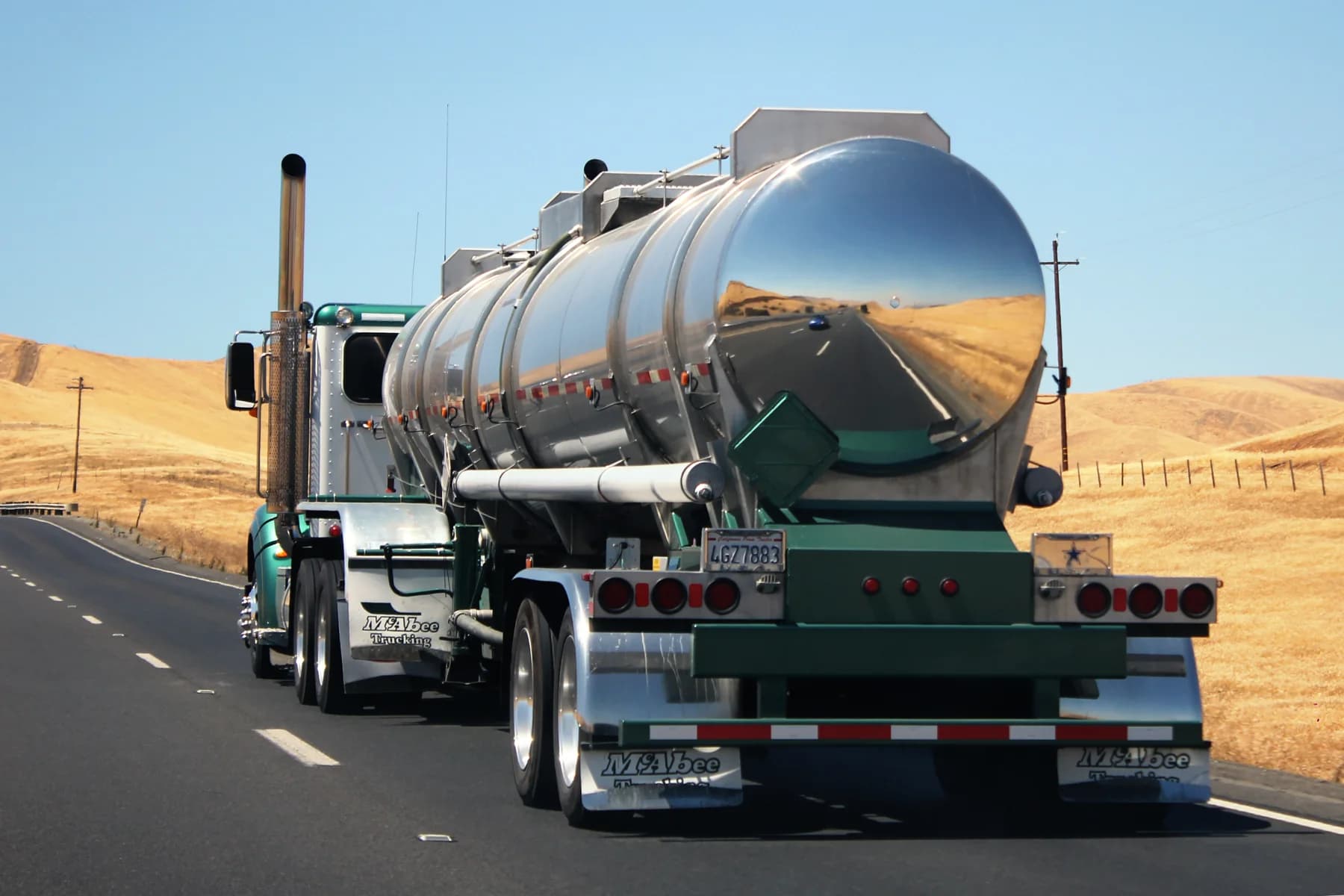

Interstate 35 is a north-south route through the middle of the country. FHWA's route log, current as of January 2026, lists 1,494.50 miles of I-35 across six states: Texas, Oklahoma, Kansas, Missouri, Iowa and Minnesota. The cities it serves run from Laredo in south Texas to Duluth in northern Minnesota, and in between include San Antonio, Austin, the Dallas and Fort Worth area, Oklahoma City, Wichita, Kansas City, the Des Moines area and the Twin Cities.
That makes I-35 a useful case study in what can and cannot be said about a freight corridor from public sources.
The route by state
| State | Miles of I-35 (FHWA route log) |
|---|---|
| Texas | 407.23 |
| Oklahoma | 234.82 |
| Kansas | 235.45 |
| Missouri | 109.97 |
| Iowa | 205.58 |
| Minnesota | 301.45 |
| Total | 1,494.50 |
The route splits twice. In north Texas it divides into I-35E through Dallas and I-35W through Fort Worth. In Minnesota it divides again into I-35E through St. Paul and I-35W through Minneapolis. The route log counts these as separate routes: I-35E totals 136.30 miles and I-35W 127.23 miles across the two states. The log counts I-35 itself as running on I-35E for 96.95 miles in Texas and 39.23 miles in Minnesota. It also records where I-35 shares pavement with other Interstates, including I-10 in Texas, I-40 and I-44 in Oklahoma, I-70 and I-29 in Missouri, and I-80 in Iowa.
Its federal freight status
FHWA's National Highway Freight Network includes the entire Interstate System. Each Interstate mile sits either on the Primary Highway Freight System, which FHWA describes as the most critical highway portions of the U.S. freight system as determined by measurable and objective national data, or in the non-PHFS Interstate subsystem, which FHWA says provides continuity and access to freight facilities. I-35 carries federal freight designation because it is an Interstate. The national freight corridors piece explains how the four subsystems fit together.
Designation is a policy status. It does not say how many trucks use a given mile.
Where a truck count would come from
Statements like "X trucks a day on I-35" need a measurement, and none of the sources cited here publishes one for the whole route. Three kinds of data answer that question, and they are not interchangeable.
FHWA's Freight Analysis Framework publishes estimated average daily truck volumes on the National Highway System for a 2017 base year and for a 2050 projection, along with commodity-specific versions. The 2050 maps are forecasts and the 2017 maps are model estimates for a past year. Reading either as current observed traffic is a mistake.
Observed counts come from each state's traffic counting program, and each of the six states runs its own. Performance data sits in FHWA's Highway Performance Monitoring System and the National Performance Management Research Data Set, both listed by FHWA as data resources. A defensible I-35 figure names the state, the segment, the counting method and the year.
One segment in detail
Agencies describe their own segments of a long route in their own terms. In Texas, TxDOT's Mobility35 program covers 79 miles of I-35 in Williamson, Travis and Hays counties, and the agency calls I-35 through Central Texas "one of the most congested highways in Texas." That is an agency's characterization of one segment of a 1,494-mile route. Congestion is not the same variable as truck share, and one state's description does not carry over to the other five. Other states on the route publish their own I-35 project pages.
What construction changes for a truck driver
Long corridors go through reconstruction, and commercial driver training addresses work zones directly. The New Jersey CDL manual says speeding traffic is the leading cause of injury and death in roadway work zones. It tells drivers to observe posted limits throughout, to watch that speed does not creep back up through long construction sections, and to slow further when a worker is close to the roadway. It notes that commercial vehicles are often wide and take up most of a lane, and that work zones may have narrower lanes.
For why a combination vehicle handles a work zone differently from a car, see why truck crashes differ. For the weight and route rules that apply on any Interstate, see how heavy trucks use Interstate highways.
What this page does not claim
It does not rank I-35 against other corridors, give a truck volume or truck share for any segment, describe the status of any construction project, or report crash figures. Each would need a dataset not verified here.
Sources
- FHWA Route Log and Finder List, Table 1: Main Routes of the Interstate System (as of January 2026)fhwa.dot.gov/planning/national_highway_system/interstate_highway_system/routefinder/table01.cfm
- FHWA: National Highway Freight Networkops.fhwa.dot.gov/freight/infrastructure/nfn/index.htmSource consulted: 2026-09-18. Regulations may change; check the current official text before relying on them.
- FHWA: Freight National Statistics and Mapsops.fhwa.dot.gov/freight/freight_analysis/nat_freight_stats/index.htmSource consulted: 2026-09-18. Regulations may change; check the current official text before relying on them.
- TxDOT: Mobility35txdot.gov/mymobility35.htmlSource consulted: 2026-09-18. Regulations may change; check the current official text before relying on them.
- New Jersey MVC Commercial Driver License Manualnj.gov/mvc/pdf/license/CDL_Manual.pdfSource consulted: 2026-09-18. Regulations may change; check the current official text before relying on them.
Read next
National Freight Corridors: How the Network Is Built
How FHWA's National Highway Freight Network defines U.S. freight corridors. The four subsystems, their mileage, and what designation leaves out.
How Heavy Trucks Use Interstate Highways
The Interstate system is the designated core of a national freight network, the road where federal truck weight limits bite hardest, and a place that sets its own demands on how a heavy vehicle is driven.
Why Truck Crashes Differ: Mass, Braking, Articulation
Why a loaded tractor-trailer moves unlike a car. Speed and stopping, brake lag and heat, center of gravity, rearward amplification and jackknife.